
Draw the yarn path first
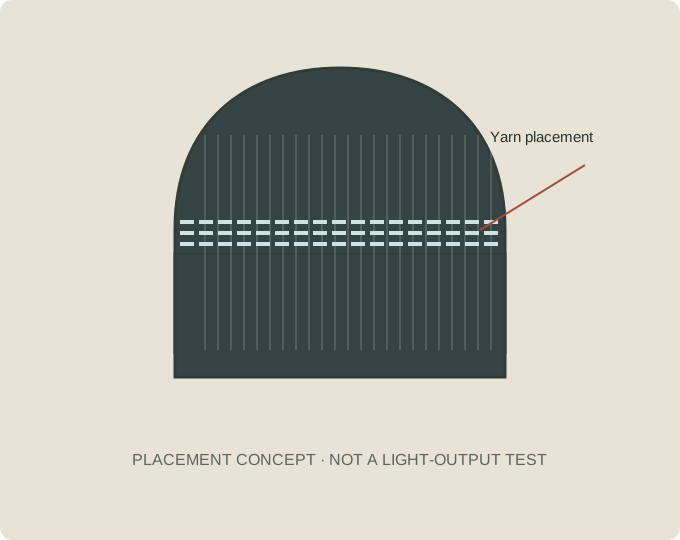
Mark the reflective stripe, motif or other knitted section on the hat. Explain whether it runs all the way around, appears only on the front or sits in a particular part of the pattern. The drawing should also show the cuff in its worn position.
Discuss the base yarn and how the added yarn affects the desired structure. The aim is to assess the actual knitted combination, including feel and stretch, rather than approve an effect in isolation.
A controlled photo record
| Record | Purpose |
|---|---|
| Same sample and revision | Keep design changes separate from lighting changes |
| Ordinary-light view | Show the everyday colour and texture |
| Directed-light view | Record light source, distance and viewing position |
| Close-up of the knit | Show where the reflective yarn is incorporated |
| Written requirement | Distinguish an aesthetic effect from a measured performance or safety requirement |
Do not compare unrelated lighting setups
A phone flash close to the lens and a light placed away from the observer can produce different-looking images. Changing the camera exposure can also change how dramatic a photograph appears. Record the conditions used for the review.
Use the images as a sample discussion record. They should not be labelled as a tested viewing distance or guaranteed night visibility without a suitable basis for that claim.
Keep safety claims in their own workstream
If the intended product has a safety application, identify it at the start and establish the relevant testing and compliance requirements for the finished product. A yarn component or an attractive reflective photograph is not enough on its own.
For an aesthetic detail, use precise language about the design: where the yarn is placed and which sample was reviewed. Avoid turning that description into a promise of personal protection.
What to send our team
Include the beanie shape, proposed yarn, colourway, a marked placement sketch, planned quantities and the ordinary appearance you want. Add any testing or documentation requirement before the sample is developed.
The preview uses a labelled illustration because the project’s own reflective swatch and controlled photographs are still to be added. It does not use an invented photograph of a reflective result.