
Start with the way it should fit
A photograph of an unworn hat leaves the intended fit open to interpretation. Add a worn reference or explain where the cuff should sit and how much space you want above the head. A short fisherman shape and a slouch fit should not share an undefined “standard” measurement.
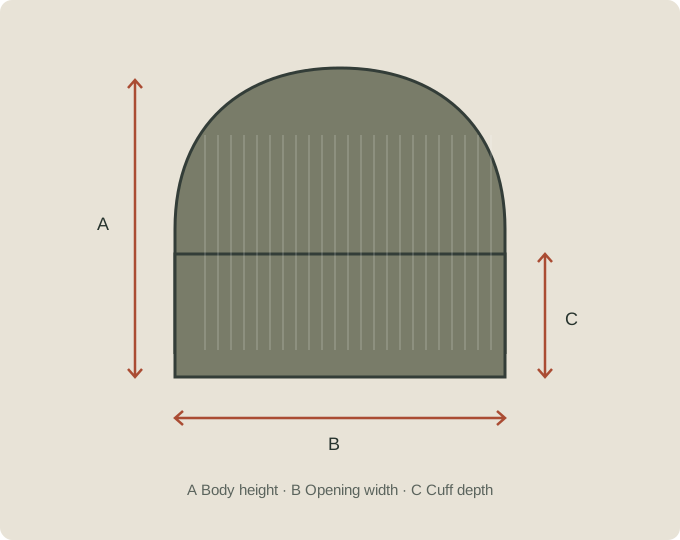
Measure a reference hat laid flat and unstretched. Record opening width, body height and cuff depth, and state whether body height includes the cuff unfolded. Keep the measurement method next to the numbers.
Describe the yarn separately from the colour
List the target fibre composition first. If you have a hand-feel reference, send the sample or describe which qualities matter. A material name alone does not define the yarn thickness, knitted weight or finished feel.
Then identify each colour: body, cuff, knitted artwork and any separate logo or label. A shade reference on a screen should lead to physical yarn or sample review rather than be treated as an exact finished colour standard.
A one-page brief
| Section | Include |
|---|---|
| Product | Intended wearer, fit reference and silhouette |
| Measurements | Flat measurement method, body height, opening width and cuff depth |
| Yarn | Composition requirement, texture reference and any evidence requirement |
| Colourways | Separate yarn and branding colours, with quantity per colourway |
| Artwork | File revision, dimensions, method and measured position |
| Commercial brief | Sample request, planned quantity, destination and target arrival date |
Give the logo a real size
Artwork floating on a mockup is not a placement specification. Mark its width, height and relation to the cuff edge or seam. Check whether it faces the right way when the cuff is folded.
For knitted-in artwork, discuss detail at the stitch scale. For embroidery or patches, review stretch and the reverse side as well as how the front looks. A woven cuff label also needs a fold and reading-direction decision.
Leave a clear record of open questions
You may be undecided between two yarns or unsure whether a logo should be embroidered or knitted in. Put those questions in the brief. They can then be considered against the feel, appearance, quantity and sampling requirements.
Give the brief a date or revision name. After a sample review, carry the agreed changes into the next revision so that the artwork, measurements and yarn notes continue to describe the same hat.